A roof bill you didn't plan for: how Ontario homeowners can pay for big repairs without sinking into debt
How to pay for a new roof in Ontario without going into debt: what insurance covers, your contract rights, and the real cost of HELOCs, loans and 0% plans.

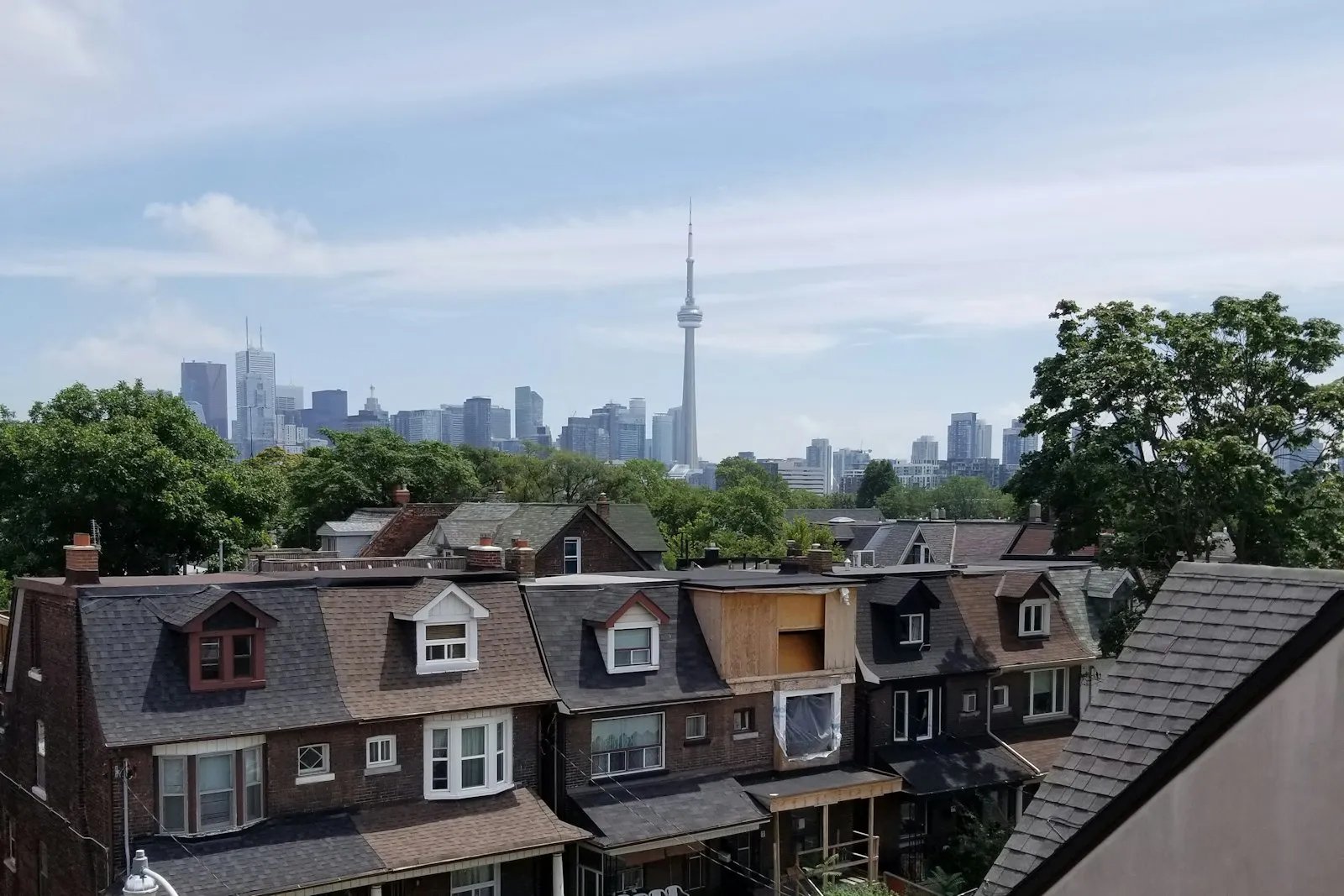
Fall is when many Ontario homeowners learn their roof needs work, often after a windstorm or a last look before the snow. If you have to pay for a new roof or a major repair, how you pay matters almost as much as the price. Home insurance generally won’t help with a roof that has simply worn out: the Financial Consumer Agency of Canada (FCAC) says insurers expect shingles to age and need replacing, so that cost is yours.1
It comes at an awkward time: employment fell in September, and lower borrowing costs aren’t a given, as our look at the Bank of Canada’s Oct. 28 decision explains.
Will home insurance pay for my roof?
It depends on why the roof needs work. The FCAC lists wind-related weather, ice and hail among the events a policy may cover, but adds that “A home insurance policy doesn’t cover maintenance costs,” nor damage caused by a lack of upkeep.1
If a storm or fallen branch did the damage, call your insurer before hiring anyone for permanent repairs. The Insurance Bureau of Canada suggests photographing the damage, keeping notes and saving receipts for emergency repairs, which may be reimbursed.2 Claim deadlines usually run from 90 days to 12 months after the event, the FCAC says, and a claim barely above your deductible may not be worth a possible rise in premiums.3
Get the roof checked before winter
A fall inspection can turn a midwinter emergency into a repair you can plan for. Ice dams are a common worry, but they don’t always mean the roof has failed. A Toronto roofer’s explainer on why ice dams form describes them mainly as a heat-loss problem: warm attic air melts snow on the roof, and the water freezes again at the colder eaves. It names air sealing, insulation and ventilation as the lasting fixes, worth knowing before agreeing to a full replacement for that reason alone.
Be wary of a door-to-door offer of a free roof inspection. Ontario warns it can lead to a push for urgent, costly work, with a contract already drawn up.4
What are my rights when hiring a roofer in Ontario?
Ontario’s renovation guidance covers the essentials:4
- Get it in writing. Ontario law requires a written contract for any renovation job over $50. Get itemized written estimates from at least three contractors.
- Attach the estimate. If it is part of the contract, the final price can’t run more than 10% over it unless you agree to new work or a new price.
- Keep the deposit small. Ontario recommends no more than 10% down and never paying in full before the job is done. Avoid cash, or get a detailed signed receipt.
- Check the contractor on the province’s Consumer Beware List and confirm WSIB coverage.
- Know your cooling-off right. A contract of $50 or more signed in your home can be cancelled for any reason within 10 calendar days, though you may owe for work already started.
Ways to pay for a roof, compared
| Option | What to watch |
|---|---|
| Savings or emergency fund | No interest, and no new debt.1 |
| Contractor or retail financing | Ontario says arranging your own financing may be wiser.4 A 0% promotion can end with one missed payment; the FCAC shows a rate jumping from 0% to 35%.5 |
| Home equity line of credit (HELOC) | Often cheaper than unsecured loans or cards, but your home is the collateral, most rates are variable, and paying only interest never reduces the balance.6 |
| Personal loan | Fixed payments. In an FCAC example, $2,000 at 19.99% costs $2,220 over 12 months but $3,180 over 60.7 |
| Credit card | Usually dearer than a HELOC, so best kept for an amount you can clear quickly.6 |
By law, lenders can’t charge more than 35% a year, fees included.7 A quote near that ceiling is a reason to stop and compare.
What if the roof is the bill that tips the budget over?
If a repair would land on top of debts you are already struggling with, get help before borrowing more. A non-profit credit counsellor can help with a budget, while a Licensed Insolvency Trustee (LIT) can explain formal options, including a consumer proposal: a legally binding offer to repay part of your unsecured debts, or take longer to pay, over no more than five years.8 Credit cards and unsecured loans can generally be included, and the Office of the Superintendent of Bankruptcy (OSB) says you keep your assets as long as you keep paying secured creditors, such as your mortgage lender.8 The trade-off: a proposal generally brings the lowest possible credit score and stays on your credit report for its term plus a few years.8
Our guide to debt help in Ontario covers the provincial rules, and Harris & Partners’ explanation of consumer proposals walks through the process.
What this means for you
- Inspect before the snow, leaving time to get quotes and save.
- Call your insurer first if the damage was sudden.
- Use Ontario’s rules: three written estimates, the estimate in the contract, a small deposit.
- Compare the total cost of credit, not the monthly payment.
- Talk to someone early if the bill would deepen your debt. Many LITs offer a free first consultation, and Harris & Partners has Licensed Insolvency Trustees across Ontario.
This is general information, not financial or legal advice for your situation.
Footnotes
-
Financial Consumer Agency of Canada, “Home insurance for unexpected events and disasters” (modified July 14, 2026). https://www.canada.ca/en/financial-consumer-agency/services/insurance/unexpected-events-disasters.html ↩ ↩2 ↩3
-
Insurance Bureau of Canada, “After the Storm: Insurance Essentials for Severe Weather Recovery,” Aug. 19, 2025. https://www.ibc.ca/news-insights/in-focus/after-the-storm-insurance-essentials-for-severe-weather-recovery ↩
-
Financial Consumer Agency of Canada, “Making an insurance claim.” https://www.canada.ca/en/financial-consumer-agency/services/insurance/make-claim.html ↩
-
Government of Ontario, “Your rights when starting home renovations or repairs” (updated Aug. 6, 2026). https://www.ontario.ca/page/your-rights-when-starting-home-renovations-or-repairs ↩ ↩2 ↩3
-
Financial Consumer Agency of Canada, “Buy now, pay later plans.” https://www.canada.ca/en/financial-consumer-agency/services/loans/buy-now-pay-later.html ↩
-
Financial Consumer Agency of Canada, “Home equity lines of credit.” https://www.canada.ca/en/financial-consumer-agency/services/mortgages/home-equity-line-credit.html ↩ ↩2
-
Financial Consumer Agency of Canada, “Personal loans.” https://www.canada.ca/en/financial-consumer-agency/services/loans/personal-loans.html ↩ ↩2
-
Office of the Superintendent of Bankruptcy, “You Owe Money — Consumer proposals.” https://ised-isde.canada.ca/site/office-superintendent-bankruptcy/en/you-owe-money/you-owe-money-consumer-proposals ↩ ↩2 ↩3
Sources
- Financial Consumer Agency of Canada — Home insurance for unexpected events and disasters
- Financial Consumer Agency of Canada — Making an insurance claim
- Insurance Bureau of Canada — After the Storm: Insurance Essentials for Severe Weather Recovery (Aug. 19, 2025)
- Government of Ontario — Your rights when starting home renovations or repairs (updated Aug. 6, 2026)
- Financial Consumer Agency of Canada — Home equity lines of credit
- Financial Consumer Agency of Canada — Buy now, pay later plans
- Financial Consumer Agency of Canada — Personal loans
- Office of the Superintendent of Bankruptcy — You Owe Money: Consumer proposals

This article is general information about Canadian debt and insolvency, not legal or financial advice for your situation. Figures are accurate as of the publication date.